
Choosing between solar vs blackout shades? Learn the key differences in light control, privacy, and UV protection to find the best fit for your NYC or NJ home.
When homeowners begin their search for new window treatments, one of the most common questions is solar versus blackout shades. Both are popular choices for modern homes in NYC and New Jersey, but they serve different purposes. Understanding what each does well — and where each falls short — will help you decide which room needs which solution.
What Are Solar Shades? Understanding Light Filtering
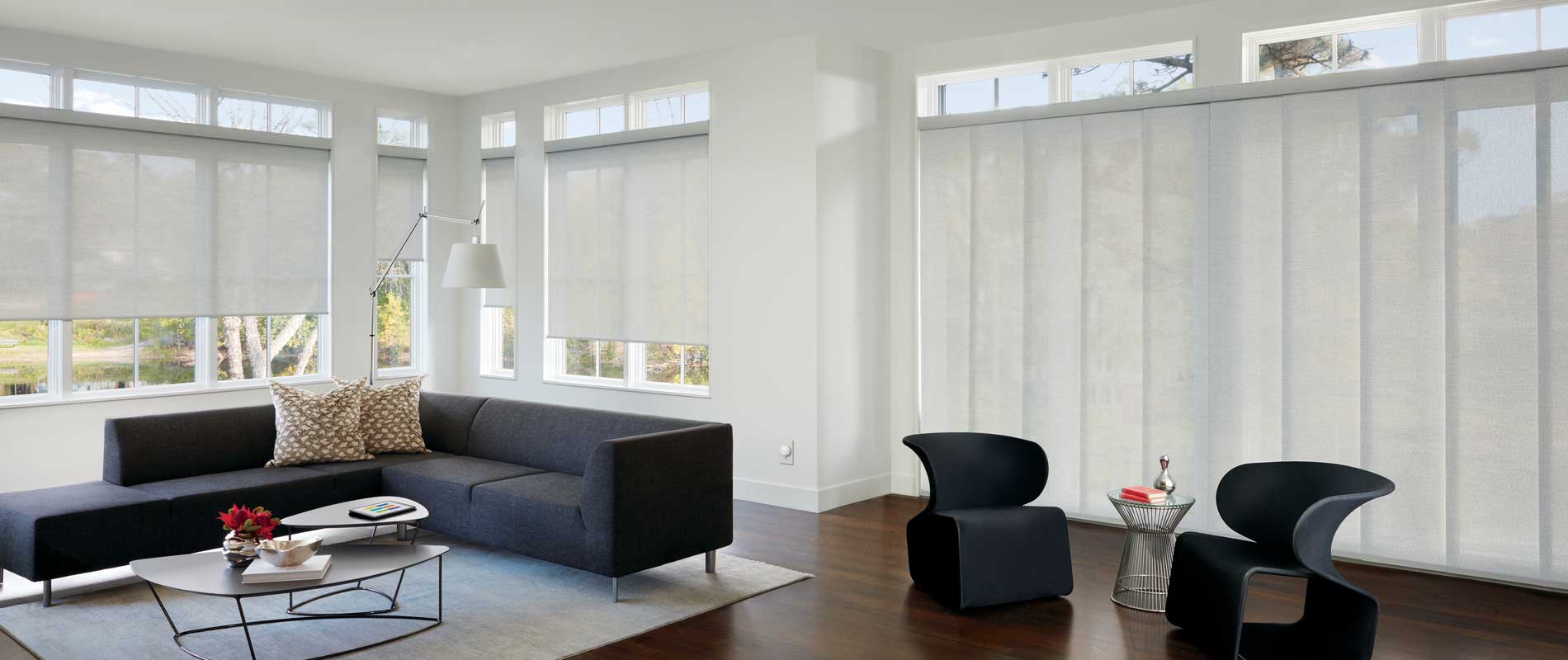
Solar shades are designed to manage sunlight without fully blocking your view. Made from a woven mesh fabric, they filter UV rays, reduce glare on screens, and cut down on heat buildup, while still letting you see outside. They're a strong choice for living rooms, kitchens, and sunrooms — and for many Manhattan residents, they're the default answer to intense sun reflecting off neighboring buildings.
Solar shades come in a range of openness factors, which determine how much light and view they let through:
- 1% openness — the tightest weave, offering the strongest glare and UV control with the least outward view. Best for rooms with intense direct sun or where privacy is more important than the view.
- 3% openness — a good middle ground: solid sun control while still preserving a reasonable view outside.
- 5% openness — lets in more natural light with better outward visibility, at the cost of somewhat less glare control.
- 10% openness — the most view and the most light, but the least glare and privacy control of the four.
Pros: protects furniture and art from UV fading, reduces solar heat gain, keeps your outside view during the day. Cons: does not provide full privacy at night. Because solar shades are semi-transparent, once it's dark outside and your interior lights are on, people outside may be able to see silhouettes or movement inside, depending on the fabric's openness factor.
What Are Blackout Shades? Room-Darkening for Bedrooms and Media Rooms
Blackout shades use opaque materials or room-darkening liners to block the large majority of light entering a room. They're a common choice for bedrooms, nurseries, and media rooms where light control matters most. In busy parts of NYC, they're often the top choice for cutting down streetlights and city glow at night. In suburban Bergen County homes, they're frequently used in primary suites for a darker morning.
It's worth being precise about what "blackout" actually means: the fabric itself blocks nearly all light that would otherwise pass through it, but a shade is not a perfectly sealed room. Depending on your window and how the shade is mounted, some light can still enter around the edges or bottom of the shade — an inside-mount installation with side channels will control this far better than a basic outside mount. We'll walk you through the right mounting option for your specific window during your consultation.
Pros: strong privacy, blocks the large majority of incoming light, supported sleep quality, some sound dampening. Cons: blocks the view entirely when closed, and can make a room feel darker even when the shade is only partially lowered.
Room-by-Room: Which Shade Goes Where
- Living room: solar shades, to preserve the view and manage glare
- Dining area: solar or a light-filtering fabric
- Home office: solar shades, mainly for glare control on screens
- Bedroom: blackout or room-darkening
- Nursery: blackout or room-darkening
- TV/media room: blackout or room-darkening
- Rooms that need a daytime view and nighttime privacy: consider a dual-shade setup (below)
Comparing Privacy Levels
Privacy is one of the biggest factors in this decision. Solar shades give you good daytime privacy, since the outside is brighter than the inside — but that reverses after dark. Blackout shades provide consistent privacy day and night, which matters if your home is close to or directly facing another building.
The Best of Both: Dual Shade Systems
If you don't want to choose, you don't have to. Hunter Douglas dual-shade systems combine a solar shade and a blackout shade on a single headrail, giving you light-filtering, view-preserving daytime function and full room-darkening privacy at night. This is a popular solution for bedrooms in both Manhattan apartments and Bergen County homes where one shade needs to do both jobs.
Motorizing Solar and Blackout Shades
For large windows, multiple shades in one room, or dual-shade setups, motorized shades make daily operation far easier — lower your solar shade during a bright afternoon or switch to blackout at bedtime with a single tap or a scheduled routine, rather than adjusting each shade by hand.
Conclusion: Making the Right Choice for Your Space
The choice between solar and blackout shades comes down to what each room needs. Living areas typically benefit from the view-preserving qualities of solar shades, while bedrooms and nurseries are usually better served by blackout. At Window Horizons, we help you assess each room and find the right balance — including dual-shade solutions where one room needs both.
Looking to upgrade your window treatments in NYC or New Jersey? Contact Window Horizons today for a free in-home consultation.