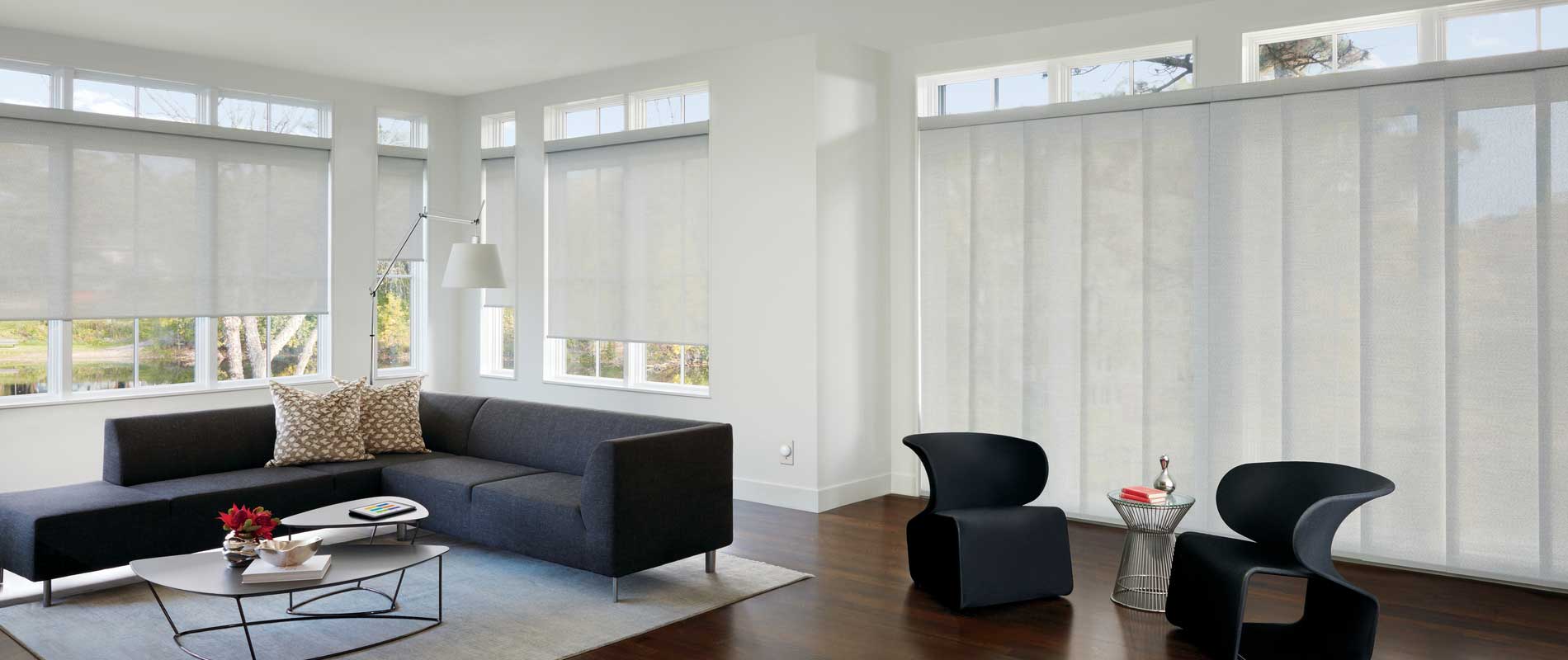

Honeycomb shades, also called cellular shades, are made of pleated fabric cells that trap air against the window. They work well in bedrooms, living rooms, home offices, and nurseries.
Honeycomb shades, also called cellular shades, are made of pleated fabric cells that trap air against the window. This layer helps reduce heat loss in winter and heat gain in summer, while improving light control, privacy, and comfort. They work well in bedrooms, living rooms, home offices, and nurseries.
What Are Honeycomb Shades?
Honeycomb shades get their name from their signature cell structure. Instead of a flat fabric panel, they're built from rows of hexagonal pockets that fold flat when raised and expand into 3D cells when lowered.
This design isn't just decorative - it's functional. Each cell traps a pocket of air between your window and your room, creating a natural insulating barrier.
- Also known as: cellular shades
- Hunter Douglas offers honeycomb shades in several lines, including Duette® and Applause®.
- Available in: single-cell and double-cell designs, and triple-cell through Alta Window Fashions, a separate brand in the Hunter Douglas family of companies. Duette® has a honeycomb design, Applause® is single-cell with a limited double-cell design, and Architella® is a honeycomb within a honeycomb.
Key Benefits of Honeycomb Shades
Honeycomb shades are popular for more than just their looks. Here's what makes them stand out from regular blinds or roller shades:
- Energy efficiency: Trapped air pockets reduce heat transfer through windows
- Light control: Available in sheer, light-filtering, and blackout fabrics
- Sound: Duette® helps absorb sound.
- UV protection: Helps reduce sun fading of furniture and flooring.
- Sleek, modern look: Clean lines fit both contemporary and traditional interiors
- Cordless & motorized options: Safer for homes with kids and pets
How Honeycomb Shades Improve Energy Efficiency
Windows are one of the biggest sources of energy loss in a home. Honeycomb shades directly address this by acting as a thermal buffer between glass and living space.
In colder months, the trapped air slows heat from escaping through the glass. In summer, the same barrier keeps outdoor heat from creeping in. Honeycomb shades can help improve comfort near windows and reduce heat transfer. Results vary by product, fabric, mounting and windows.
For maximum performance, pair honeycomb shades with:
- Top-down/bottom-up configurations for flexible light and privacy control. Availability varies by product, fabric and operating system.
- Motorization, such as Hunter Douglas PowerView® Motorization, where you can set schedules in the PowerView app.
Best Rooms to Use Honeycomb Shades
While honeycomb shades work well throughout a home, some rooms benefit more than others depending on light, privacy, and temperature needs.
Bedrooms
Blackout fabrics reduce light passing through the shade, but light can enter around the edges. An outside mount or compatible side-channel system can help reduce these gaps; results depend on the product and installation. Side channels such as the LightLock® system are on Duette® honeycomb shades, and availability varies by fabric and operating system. This helps with sleep quality, and they're especially useful in city apartments where streetlights or early morning sun are an issue.
Living Rooms
Light-filtering honeycomb fabrics let daylight in but generally obscure the outside view. If keeping the view matters, solar shades are the view-preserving option. Light-filtering honeycomb shades are still a natural fit for rooms where you spend a lot of time relaxing or entertaining.
Home Offices
Reduced glare on screens makes honeycomb shades a smart choice for anyone working from home. Duette® helps absorb sound.
Nurseries
Cordless, blackout honeycomb shades help keep the room dark for naps and remove the dangling-cord strangulation hazard around young children.
Large or Floor-to-Ceiling Windows
Honeycomb shades can help improve comfort near windows and reduce heat transfer. Results vary by product, fabric, mounting and windows. Very large windows may require motorization and are subject to maximum size limits, so professional measuring is important.
Choosing the Right Honeycomb Shades
A few things to think about before buying:
- Room purpose: Blackout for sleep spaces, light-filtering for common areas
- Operation style: Cordless, motorized, or top-down/bottom-up depending on household needs. Availability varies by product, fabric and operating system.
Professional measuring helps achieve the intended fit and light control. Shades do not seal air leaks in the window itself.
FAQs
- 1
Do honeycomb shades really save energy?
Yes. The trapped air in each cell reduces heat transfer through windows and can help improve insulation at the window; results vary by product, fabric, mounting and windows.
- 2
Are honeycomb shades good for bedrooms?
Yes. Blackout fabrics reduce light passing through the shade, but light can enter around the edges. An outside mount or compatible side-channel system can help reduce these gaps; results depend on the product and installation.
- 3
What's the difference between single-cell and double-cell honeycomb shades?
Double-cell shades have two rows of air pockets instead of one. Duette® has a honeycomb design, Applause® is single-cell with a limited double-cell design, and Architella® is a honeycomb within a honeycomb.
- 4
Can honeycomb shades be motorized?
Yes. Motorized honeycomb shades, such as those with Hunter Douglas PowerView® Motorization, can be controlled via remote or smartphone app, and are especially useful for hard-to-reach or large windows. Voice control with Amazon Alexa needs a PowerView Gen 3 Gateway. Apple Home needs the Gateway plus an Apple Home hub (an Apple TV or HomePod). Google Home needs the Gateway plus a Google Assistant-enabled device. Compatibility depends on the shade.
- 5
Are honeycomb shades safe for homes with kids or pets?
Cordless honeycomb shades remove the risk of dangling cords, making them a safer choice for nurseries, playrooms, and homes with pets.
- 6
Do honeycomb shades work on large or floor-to-ceiling windows?
Yes. Very large windows may require motorization and are subject to maximum size limits, so professional measuring is important.
Window Horizons offers a free in-home consultation in Manhattan and Bergen County, NJ. Contact us to schedule yours.